Where I'm From: A Juneteenth Journey

The Roots: 1982
Juneteenth is something I was educated on and have celebrated since I was about nine years old. That would’ve been around 1982, in Paris, Tennessee—my father’s birthplace.
I remember my paternal aunt loading all six of us kids into the car, packing us in tight, and pulling up to what looked at first glance like a massive, standard family cookout. But as we got out, my aunt sat us down and explained that this wasn’t just a regular picnic; it was a Juneteenth celebration. She told us exactly what that meant: this was the precise day that the westernmost enslaved people in Texas were finally notified that the Emancipation Proclamation had been signed, slavery had ended, and they were legally free.
Although I was sitting in a fourth-grade classroom at the time, this story had never once surfaced in my Social Studies curriculum. In school, our history books treated slavery as a brief, distant footnote—it was bad, and Abraham Lincoln was the sweeping hero who single-handedly saved the day. Had I heard the words Emancipation Proclamation in class? Definitely. But Juneteenth? Never.
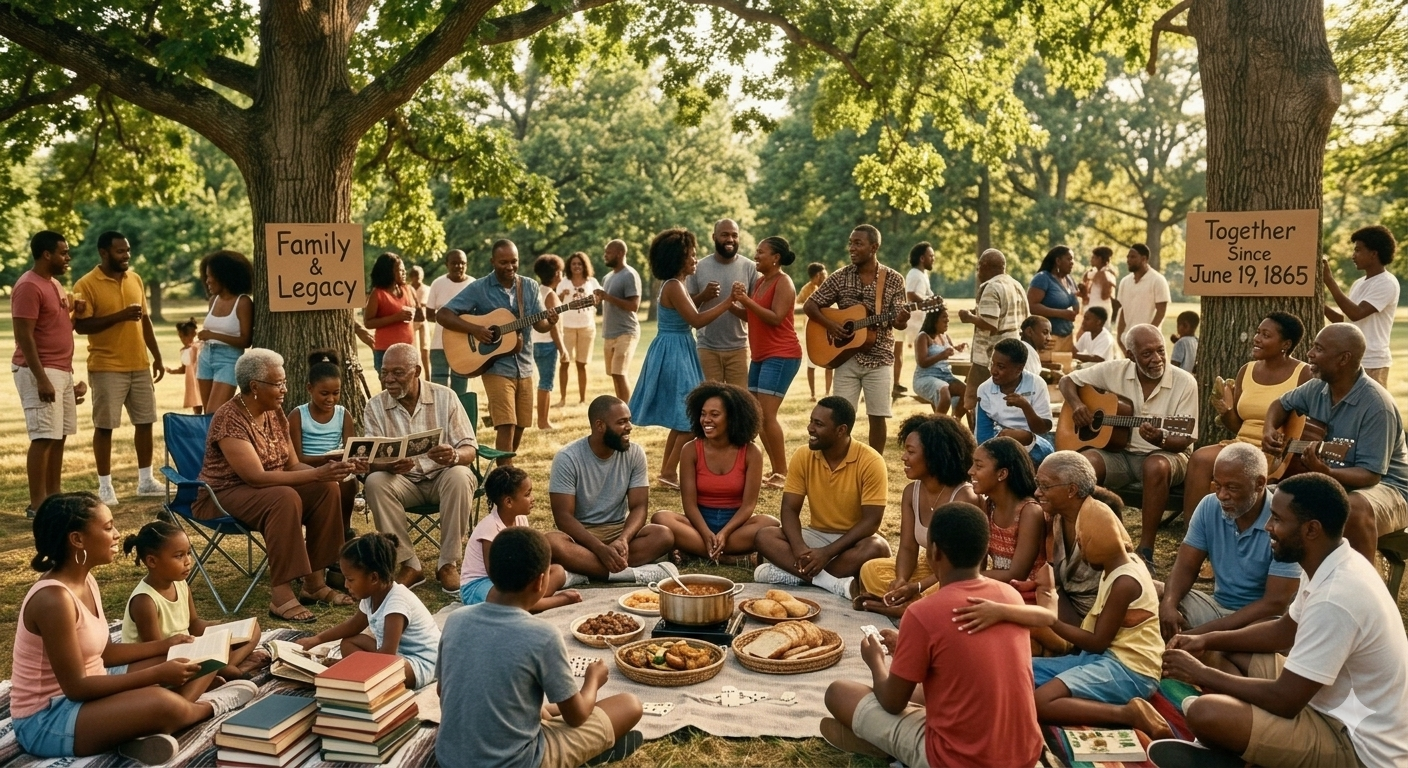
Like almost every community gathering we attended during my childhood, the Juneteenth picnic in Paris, Tennessee, was an exclusively Black event. There were no neon signs posted at the park entrance reading “Blacks Only.” Instead, there was a quiet, deep-seated cultural understanding already in place—an unmapped parameter that only Black people knew about this specific gathering, or perhaps a reality where the local white population simply knew and didn’t care to attend. Who knows; I was only nine years old.
The point is that the space belonged entirely to us. It was a picnic in its purest, most literal sense. Everything was entirely free. It was hosted at a local community center, and the food was completely taken care of. There was music bouncing off the pavement, bright sunshine, continuous laughter, and a massive pot of not-so-great baked beans.
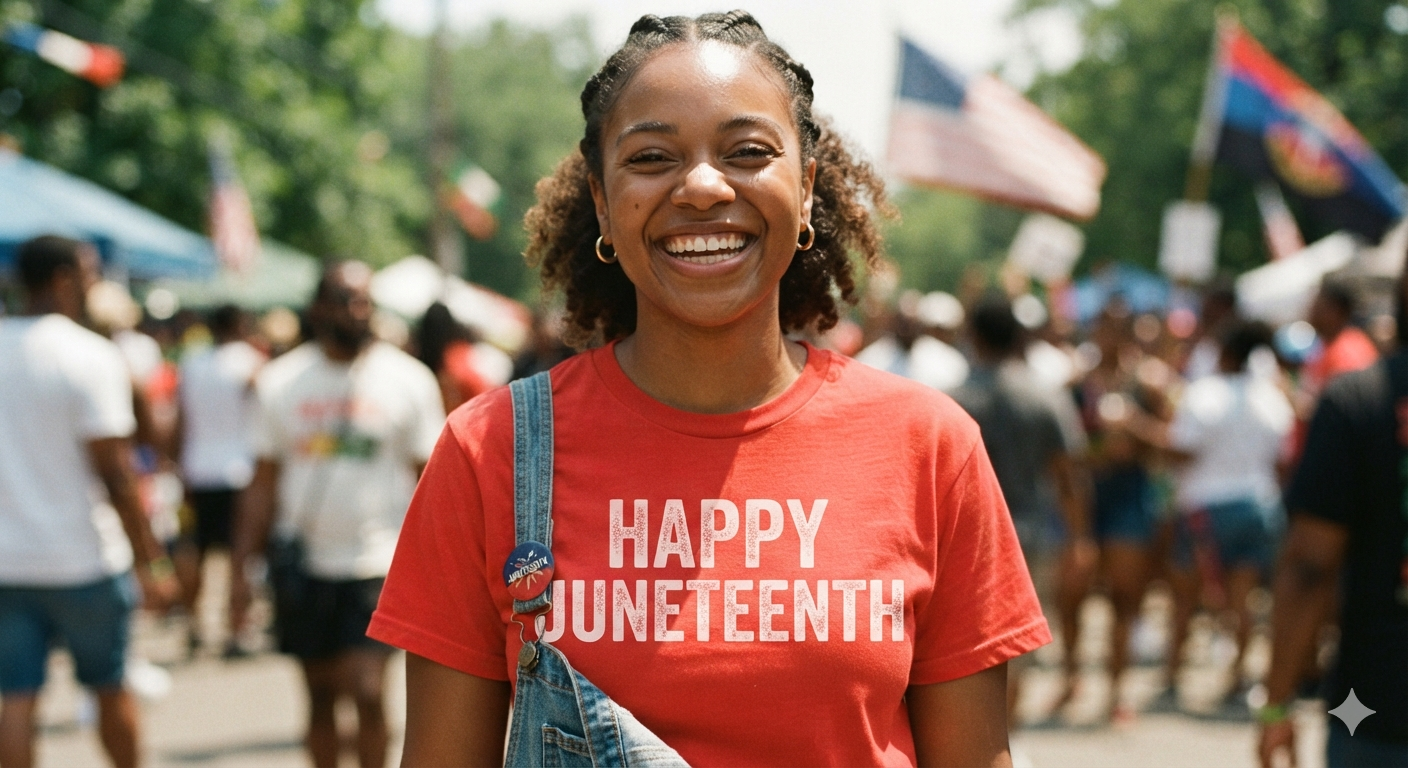
There were absolutely no vendors. There was no artisanal shea butter for sale, no corporate branding, and no long lines to buy food. What we did have were t-shirts. They were bright red, and they simply read: Happy Juneteenth. We all left the park wearing one. Also free. There was no standing-room-only claustrophobia, and no one had to wait in an endless line to get a plate of barbecue. There were just happy Black people communing, sharing space, and quietly educating the next generation of Black children.
The Shift: Portland 2021
Fast forward nearly forty years later to 2021 in Portland, Oregon. Juneteenth was officially declared a federal holiday by the Biden administration, thrusting a deeply sacred, regional tradition into the mainstream American spotlight.
Almost immediately, the digital landscape erupted. Inside local Black Portland Facebook groups, a full-on virtual squabble broke out over how this newly minted federal holiday should be handled. The community split cleanly down the middle, exposing a fascinating psychological friction regarding the definition of freedom.
On one side stood the “All Black Errthang” crew. Their stance was rooted entirely in cultural sovereignty: “This is our day. Our events. Our time to acknowledge our raw history. Let’s keep our events independent. Our own vendors. Black love and Black money circulating strictly to Black businesses on this day. Any other day of the year we can choose to open our businesses, our spaces, and our arms to non-Blacks if we want to. But today, let’s keep it blacker than Wesley Snipes with a suntan. No code-switching. No emotional labor spent educating ‘them’ on historical facts they can easily find on Google. No non-Black romantic partners tagging along to feel ignored or out of place. Today, let your white girlfriend or Filipino boyfriend go their own way. This day belongs to us.”
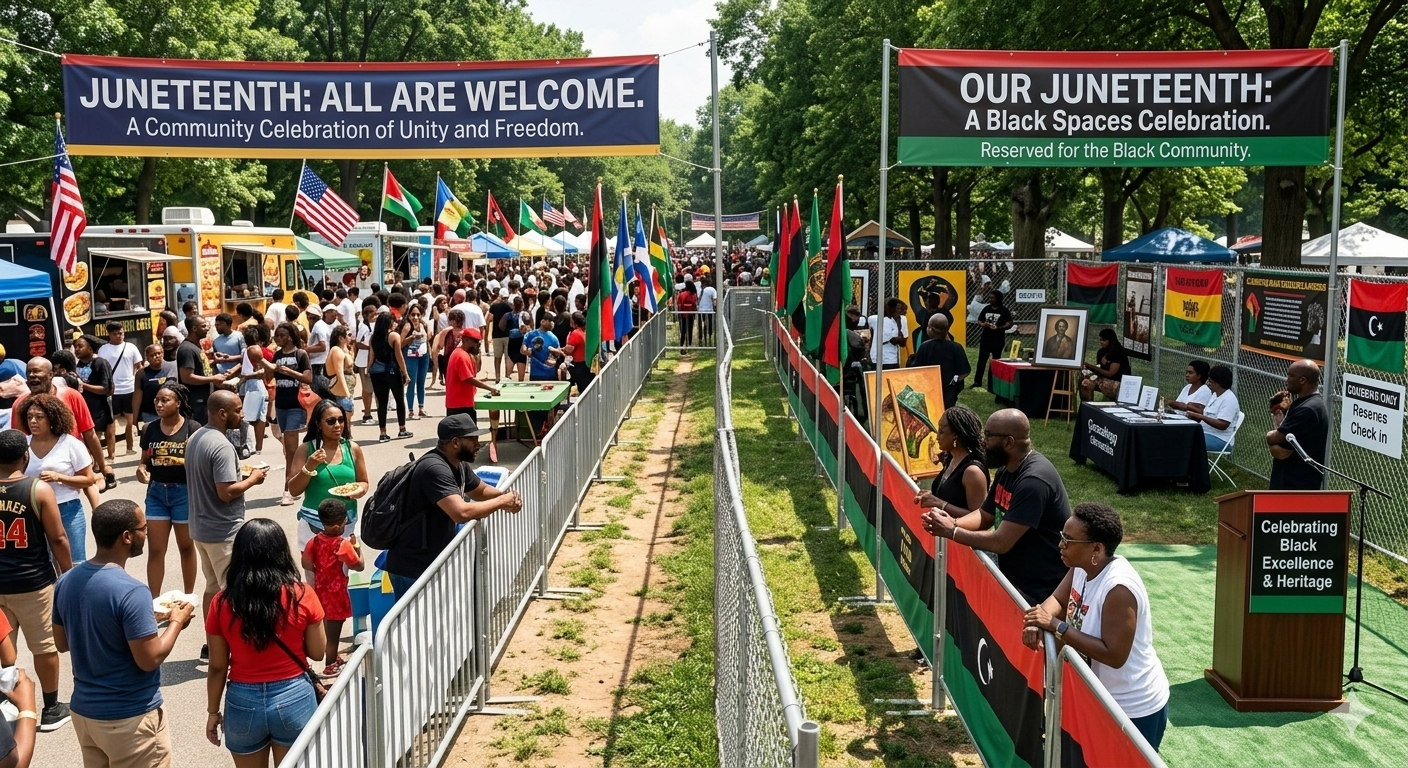
On the opposing side stood the Black Enterprise collective. These were the worldly entrepreneurs, the pragmatists, the “all money is green” contingent. Their counter-argument was built on economic expansion: “Let’s open up the spaces. Let’s make these city events entirely inclusive. That is the only structural way our businesses can grow, scale, and thrive like other races. We need the Black dollar, but let’s be real—this isn’t Atlanta where Black businesses can comfortably survive on Black-only consumer bases. We fundamentally need non-Black dollars to sustain our livelihoods.” The statistical reality of the Pacific Northwest heavily backed their play. Portland’s Black population sits at less than 10%, and the state of Oregon as a whole hovers closer to 5%. From a purely transactional standpoint, Black-owned brick-and-mortars in Oregon require non-Black patronage to keep the lights on.
What ultimately manifested from this philosophical divide was a hyper-fragmented landscape of scattered events sliced across every corner of the grid. There were the Gresham picnics, the Alberta Street faithfuls, the uptown vendor fairs off Burnside, and various pop-ups bleeding into Clackamas and Vancouver. It became so profoundly divisive that a massive wave of residents decided to opt out of the public square altogether. They went back to hosting old-school, private cookouts in their own backyards with their immediate circles.
Instead of one unified community moving with one cohesive sound, the population was completely dispersed across the city. Were the vendors still financially successful? It seems so. Were we still collectively pleased to see something so historically monumental finally recognized as a federal holiday? Absolutely.
The Commerce of Freedom
Sadly, this exact ideological tug-of-war has frozen into a rigid, ongoing argument every single year when June rolls around.
Open the spaces, or guard them. Expand the commercial footprint, or strip the commerce out entirely and return to slow, grassroots community building. Educate the uneducated, or stop spending the emotional labor altogether. Every June, the same fault lines resurface.
Collectively, the answer is that there is no singular, correct way to celebrate modern freedom. Some parts of the community require quiet remembrance. Some want a day of absolute stillness—deliberately refusing to labor for corporate structures or anyone else. Some want a day of pure optics, allowing Black culture to be visibly seen, celebrated, and felt across the belly of the country. And others want a day of aggressive economic expansion, using the national holiday to cast a massive spotlight on Black capital.
When you look at it through that lens, the endless pop-ups and conflicting events slicing across every city make perfect sense. They are simply a mirror of our own internal interpretations of what freedom actually looks like. But as we continue to navigate the undeniable power of the modern dollar, we have to protect the core peace of that 1982 picnic—ensuring that in our rush to fund the future, we don’t accidentally monetize the very spirit of the community that kept us free in the first place.