
H.A.M. - Hard as a Mamba

We’ve built entire industries around the athlete who never stops. What we rarely ask is what they’re trying to outrun.
I. The Athlete Everyone Praises
We love the mythology of the first-to-arrive, last-to-leave athletes and performers.
The Kobe stories. The Beyoncé documentaries. The Michael Jackson rehearsal tapes.
We call it discipline. Hunger. Obsession. And we reward it with shoe deals, Grammys, championship rings, and motivational speeches that tell the rest of us: “You have to want it more than your opponent.”
But we rarely ask the harder question: What happens inside a nervous system when “wanting it more” stops being a choice and becomes a mandate?
We assume obsession is a personality trait. A gift. A sign of being ‘built different.’ We rarely consider that it might be a survival strategy.
II. The Cultural Worship of Overwork
At what point does commitment become compulsion?
For many athletes and performers, the seeds are planted early. A coach pushing: “I know you can do more.” A parent who praises the grind but goes quiet about the joy. Peers who learn—and teach—that worth equals output.
To a young nervous system trying to make sense of a high-pressure environment, the message lands like this: “If I work hard enough, I can control what happens to me.”
But here’s what performance psychology teaches us about that belief: control is often a trauma response. The need to manage every variable, to outwork every competitor, to never leave anything on the table—that isn’t always ambition. Sometimes it is fear masking as discipline.
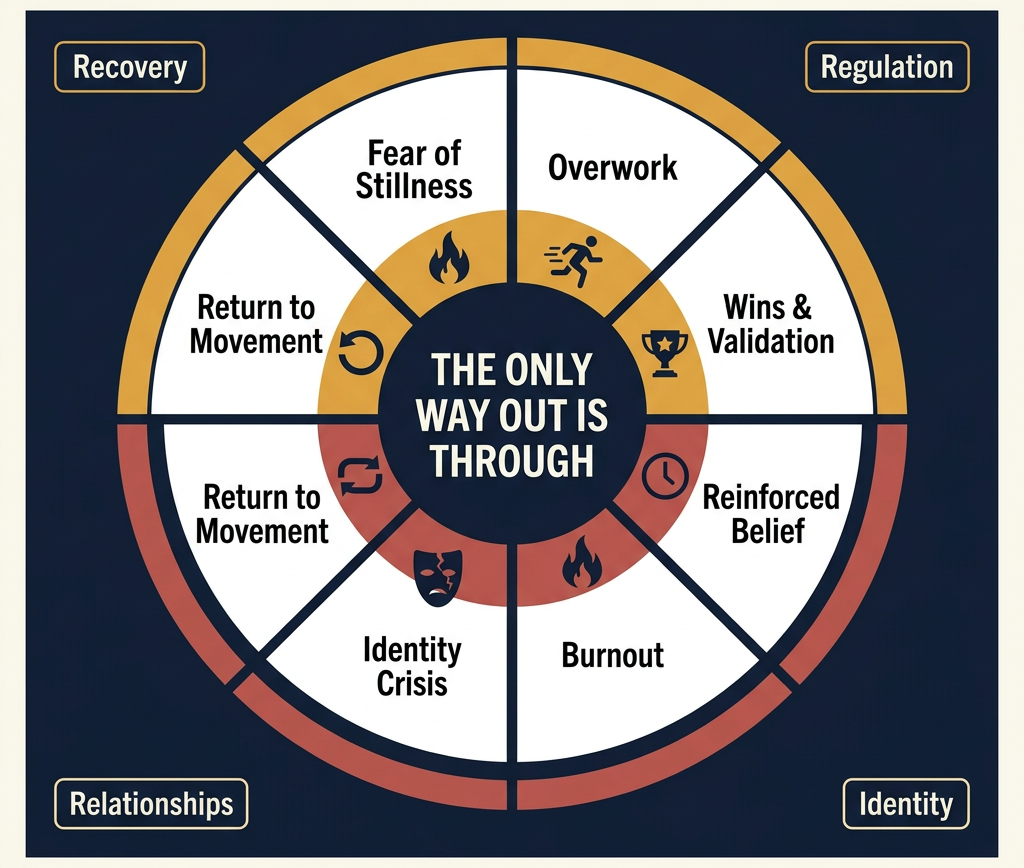
The Mamba Mentality is celebrated as the gold standard of elite focus. And there is something real and admirable in that level of commitment. But we have to be honest about what it also normalizes: sacrificing rest, relationships, emotional development, and sometimes basic safety—all in the name of greatness. The implicit lesson passed down to young athletes is this: Belonging is earned through overexertion. And the need for rest is a threat to your success.
That lesson doesn’t stay on the court. It moves into the body. Into the nervous system. Into the way a person relates to themselves long after their playing days are done.
III. Trauma and the Need to Stay Moving
For many high performers, stillness is not neutral. It is dangerous.
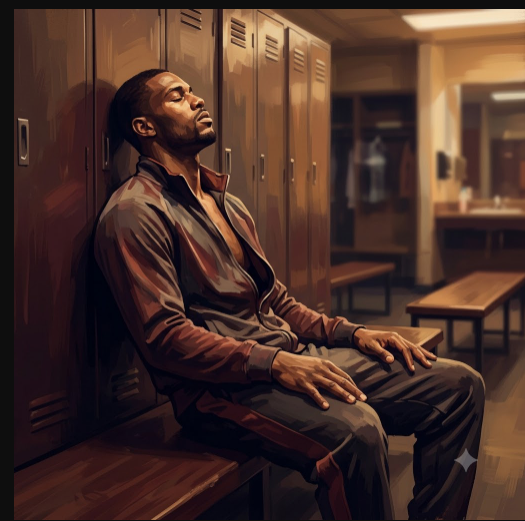
When the body stops, the mind speaks. And what surfaces in that silence is often the very thing the work was designed to avoid—shame, grief, loneliness, unresolved wounds around identity and worthiness, and a fear of inadequacy that no number of championships has been able to quiet.
So the athlete keeps moving.
Movement becomes medication. Repetition becomes regulation. Output becomes avoidance.

This is what ‘flight’ looks like when it puts on a jersey.
IV. The Psychology of the 16-Hour Athlete
The 16-hour athlete—the one who lives at the facility, who texts the trainer at midnight, who can’t sit through a family dinner without mentally rehearsing tomorrow’s session—is usually operating from one or more of these core beliefs:
“If I slow down, I’ll fall apart.” Rest isn’t recovery for this athlete—it’s a threat. Stillness risks disturbing the fragile scaffolding holding everything together. Staying in motion is the only thing that feels like stability.
“If I’m not producing, I’m worthless.” When identity and output are fused, slowing down doesn’t just feel inefficient. It feels like disappearing. Like ceasing to exist in any meaningful way.
“Someone is always catching up.” Comparison becomes a kind of paranoia. The next version of me is younger, hungrier, more talented, more loved by the algorithm—and therefore more dangerous. This belief makes rest feel like falling behind even during the off-season.

“Rest is for people who already feel safe.” Underneath the relentless drive, there is often a quiet resentment toward those who can stop without fear—and a longing for that same freedom. But they can’t access it, because safety isn’t something they’ve ever been taught to feel in stillness.
V. Why This Strategy Works — Until It Doesn’t
Let’s be clear: obsessive overwork does produce results. Elite focus. Rapid development. A level of discipline that genuinely separates performers from their peers. The strategy isn’t irrational—it works, at least for a while, and the wins it generates reinforce the belief that this is the only way.
But the costs accumulate quietly, often invisibly, until they can’t be ignored: burnout that goes beyond fatigue, emotional disconnection from the people and things that once mattered, identity foreclosure—the inability to imagine who you are outside of your sport or craft—chronic anxiety, strained relationships, and an increasing sense of emptiness even in moments that should feel like joy.
Greatness built on fear is never sustainable. The body will eventually enforce what the mind refused to accept.
VI. Kobe Bryant and the Complexity of Obsession
Kobe’s greatness is not in question here. What is worth examining is the psychological architecture underneath it.
His life became, by his own account, a numbers game: How many hours? How many shots? How many points? How much more? The culture rewarded every unit of output and largely ignored the cost. We praised the rings and moved past the relationship fallouts. We turned his obsession into a brand and sold it to the next generation of young athletes as the blueprint for success.
This is not a critique of Kobe Bryant the man. It is a critique of a system that consistently confuses obsession with excellence—and then hands that confusion to children as inspiration.

VII. What Coaches and Parents Often Miss
The adults in the room are often the last to recognize what they’re reinforcing.
Run it off. Practice until you feel confident. Superstars don’t need sleep.
These aren’t cruel instructions. They come from coaches and parents who genuinely believe in the athlete in front of them. But what the athlete hears—what their nervous system registers—is: The way through discomfort is more work. If you’re struggling, you haven’t worked hard enough yet.
That is the trauma loop. And well-meaning adults reinforce it every day in gyms, studios, and practice facilities across the country.
VIII. Questions Worth Asking
If you’re an athlete, a performer, or someone who works with them, these questions cut closer to the emotional truth than any performance metric:
What happens inside you when you stop training—not physically, but emotionally?
Who are you when you’re not producing anything?
What feelings show up in the quiet?
Are you pursuing excellence, or avoiding discomfort?
There are no wrong answers. But the answers are data.
IX. Toward Sustainable Greatness
Sustainable greatness isn’t built on the ability to outwork everyone in the room. It’s built on four things that the culture rarely teaches and almost never rewards:
Recovery—not just the body, but the emotional self. Processing. Resting. Allowing.
Regulation—understanding your own nervous system. Knowing your triggers. Learning that stillness can be safe—a quiet room doesn’t mean a storm is headed your way.
Relationships—real connection, not performance-based belonging. People who know you when the jersey comes off.
Identity—a self that exists beyond output. A person who is whole outside of what they produce.
Because here’s what every 16-hour athlete will eventually face: the lights go out. The crowd leaves. The knees give out, the voice cracks or the market shifts. And in that moment, the only person left standing is the one you’ve spent years outrunning.
The work is not just to become great. The work is to become someone who can survive their own greatness.
X. Closing Reflection
Greatness is not the absence of humanity.
It is the integration of it.