
BRB—Playing

“Just remember where you came from, I’ll be right back.” - H.E.R. “BRB”
July 31, 2026, was my dear friend Alexis Harper-Jones’ 45th birthday. For the first few months of the year, she had been sharing the LEGO sets she completed—and the anxiety and stress relief she found by losing herself in what I call her living-room LEGOLAND.
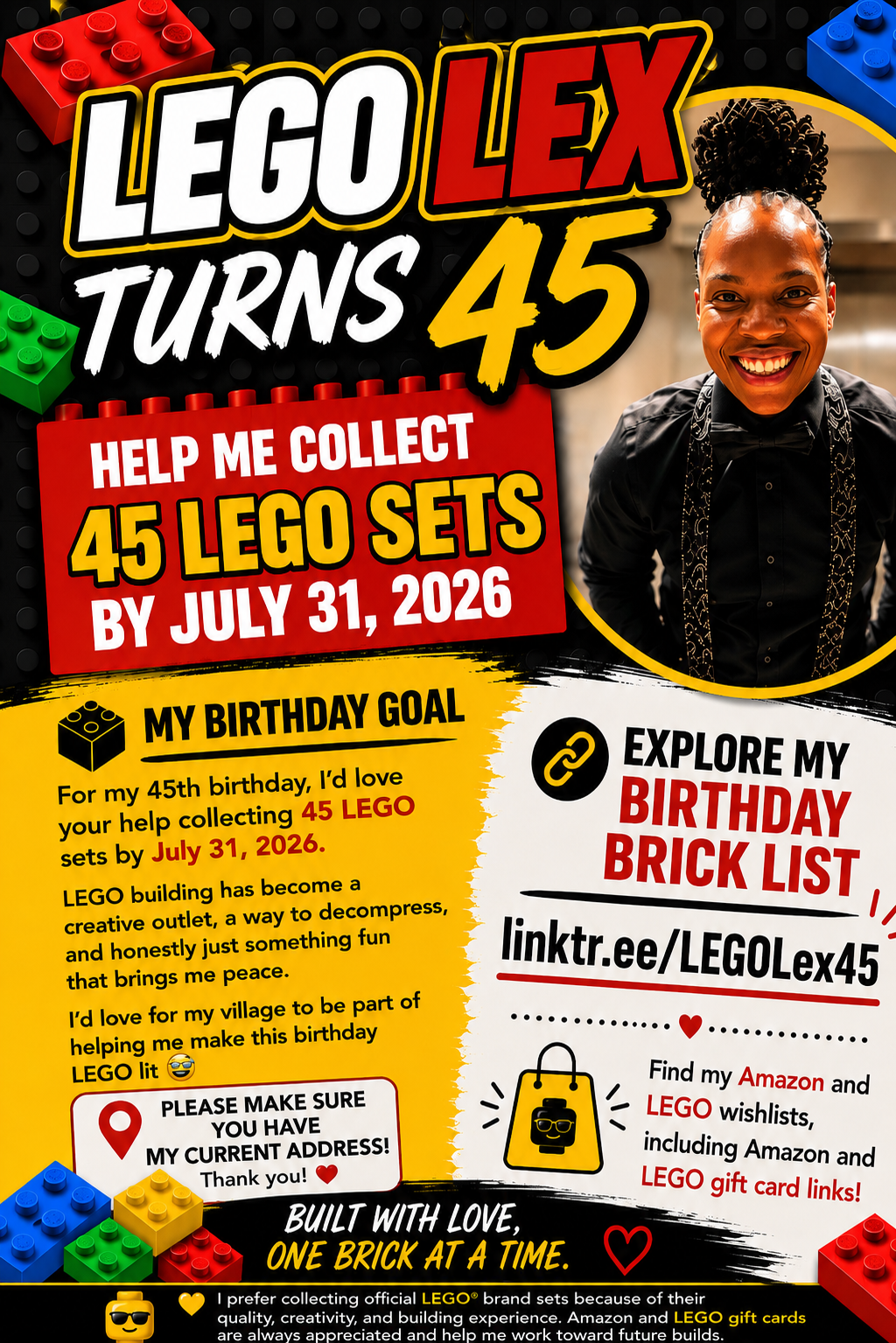
So, for her 45th birthday, she sent out a flyer—with a QR code and a link to a LEGO registry—requesting 45 sets in honor of her 45 years. Guests could order through LEGO or Amazon and have the sets shipped directly to her door.
Wait, what?
I can imagine some immediate reactions from the elders: She wants toys for her birthday? Aren’t those for children?
But perhaps “Aren’t those for children?” isn’t really a criticism of the toy. Perhaps it reflects generations taught that leisure must be earned, and that adulthood requires relinquishing play.
For many people, playtime was limited long before they became adults. Poverty, academic expectations, household responsibilities, and limited resources prevented some children from experiencing childhood without obligation. Others were swept into leagues, clubs and lessons as soon as they showed promise.
If you’re going to play ball, you need to turn it into a scholarship.
If you can sing, you need to focus on auditions.
Childhood interests became grown-up investments before children had the opportunity to discover what they enjoyed simply because it felt good.
That is the irony of Alexis’s request. Here was a newly 45-year-old woman asking for tools for playtime.
As I read her birthday flyer, I thought, this is really cool. She was asking people to give her exactly what she wanted. She was making a list for toys. like many of us once did when we believed in Santa. Except there was no adult standing nearby to tell her to add clothes or books because she couldn’t ask for just toys.
At 45, she has the autonomy to decide what belongs in her playtime registry.
No parent dictating what is practical. No “I didn’t know what to get you, so I bought a gift card.” No default Bath & Body Works gift set.
She made the assignment clear.
Redefining Adult Playtime
That is what makes Alexis’s birthday request worthy of The Recovery Report: it asks us to reconsider what adult play looks like—and why so many adults struggle to claim it without explanation.
When we think about adult life, few of us imagine one that intentionally includes playtime, especially play involving games or toys beyond a PlayStation or Words with Friends. Going to see your favorite team or catching a movie may be enjoyable, but that isn’t quite what I mean.
Much of adult leisure is organized around food, alcohol and consumption.
We have a Happy Hour and drinks to “unwind” after work. We have Paint and Sip, combining a creative activity with a night at the bar. We have boozy brunches, bottomless mimosas and Wine Down Wednesdays. Even invitations to game night often carry the expectation that everyone will bring a bottle or a dish.
We’re no longer just showing up with our balls and Barbies, ready to play.
Many activities designed for fun have also become expensive productions. Amusement parks are increasingly centered around purchasing and consuming. Family outings such as bowling or skating can require enough money, travel and coordination that they do not necessarily give busy adults an opportunity to turn off and recharge.
Enter LEGO.
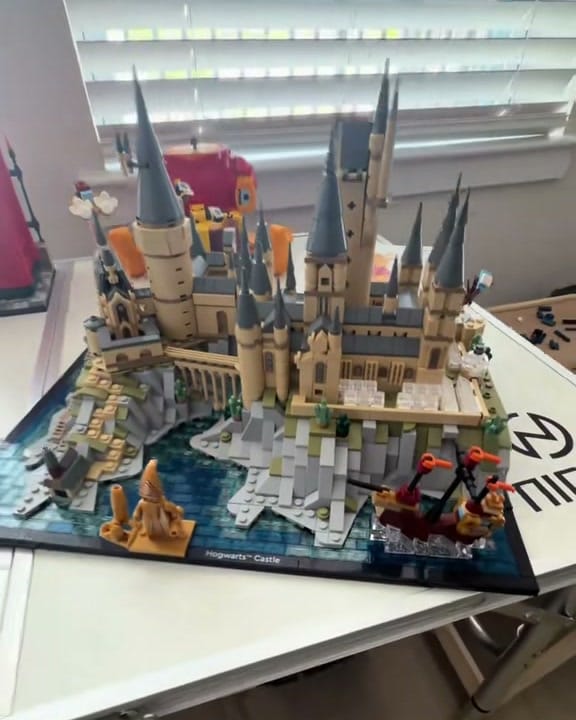
For many children and adults, LEGO building offers a focused, tactile refuge: a contained world with pieces, possibilities and enough structure to quiet everything outside it.
For Alexis, building offers something increasingly difficult to find:
Decompression without drinking. Fun without fatigue. Play without performance.
- Alexis made room for play. Who’s making room for your recovery? Architects of Recovery follows women building new ways to rest, belong and perform. Get the next story in your inbox, free.
When Play Becomes Recovery
Through its culture-marketing campaign, the LEGO Group encourages busy mothers and families to make more room for play. Featuring Black women such as Savannah James, Telsha Anderson-Boone, Jalisa Jefferson and McKenzie Caldwell-Pope, the campaign presents play as a source of creativity, exploration and connection.
That audience matters.
Black women have historically carried expectations of responsibility, productivity and care for others. This has left little room for purposeless pleasure. Reclaiming play is a quiet form of resistance. It directly challenges the belief that worth is earned through constant output.
That invitation to play points toward two dimensions of recovery: emotional regulation and identity expression.
Play offers an opportunity to reconnect with parts of us that may have been ignored, discouraged, or converted into productivity. It allows us to experience creativity without requiring that creativity to become a business, a performance, or a measurable accomplishment.
USMNT captain Tim Ream has also spoken openly about his mental health, and the role building plays in managing stress. Describing LEGO building, he said: “It compels you to block out everything happening around you and concentrate solely on the pieces and how they connect” (NBC Chicago).
That is recovery language, whether it appears in a therapist’s office, an athlete’s training routine or on the floor of somebody’s living room.
But this story is about Alexis.
Forty-Five for Forty-Five
You are probably wondering what happened with that milestone birthday request.
From what we saw on Instagram, Alexis came into 45 in full effect—from WNBA All-Star Weekend in Chicago to rooftop cocktails on the Wharf in Washington, D.C., followed by an adults-only Virgin Voyages cruise.
None of those destinations were particularly suited for packing 45 LEGO sets.
Once the birthday excitement settled in August, we saw not one, not two, but many, many LEGO boxes appearing in Alexis’s stories.
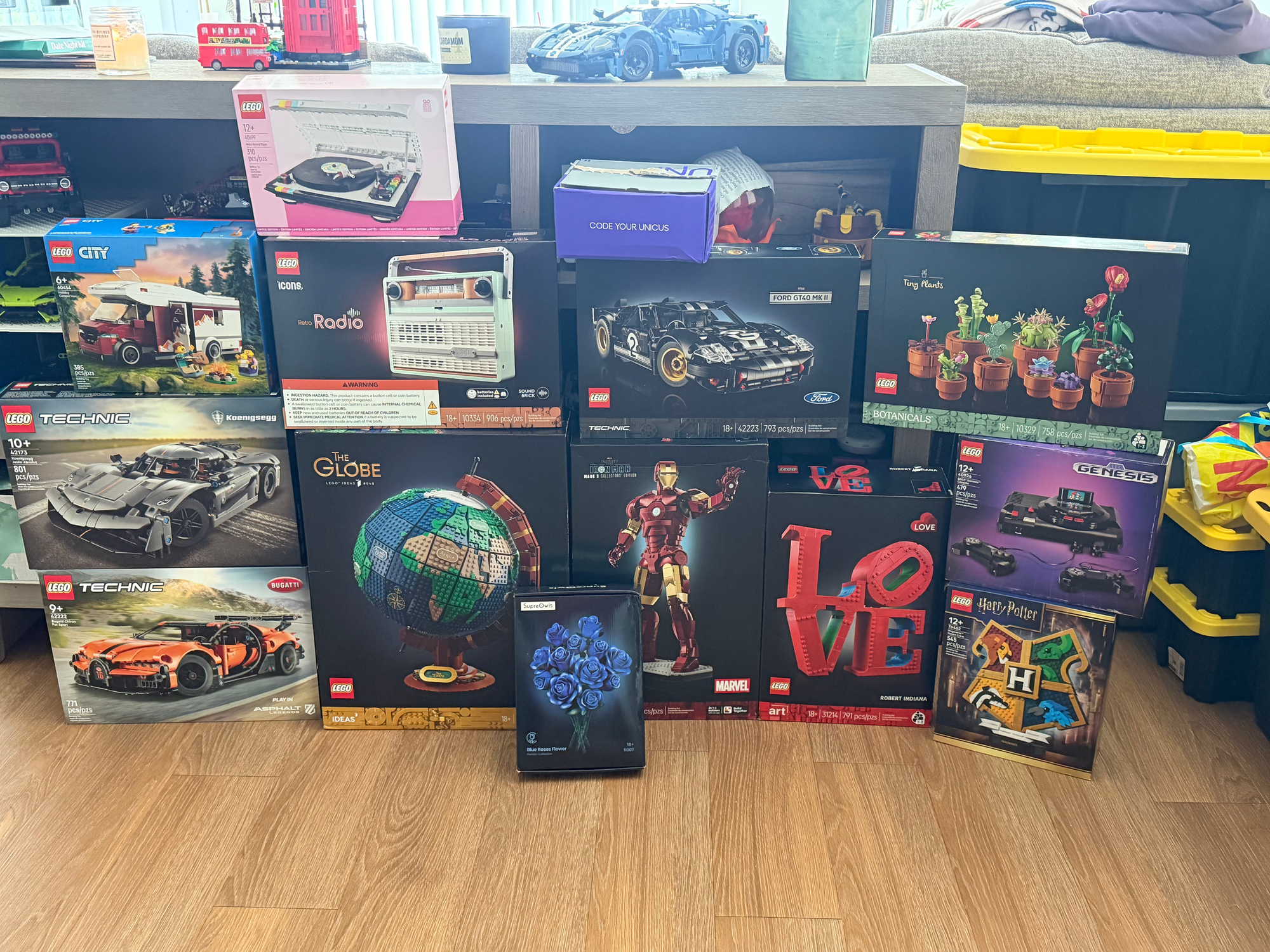
We saw the space I had dubbed her living room LEGOLAND.
Her friends and family understood the birthday assignment.
Me included.
She wants toys for her birthday?
Yes. Yes, she does, Shirley.
Look right there at the big blue shoe.
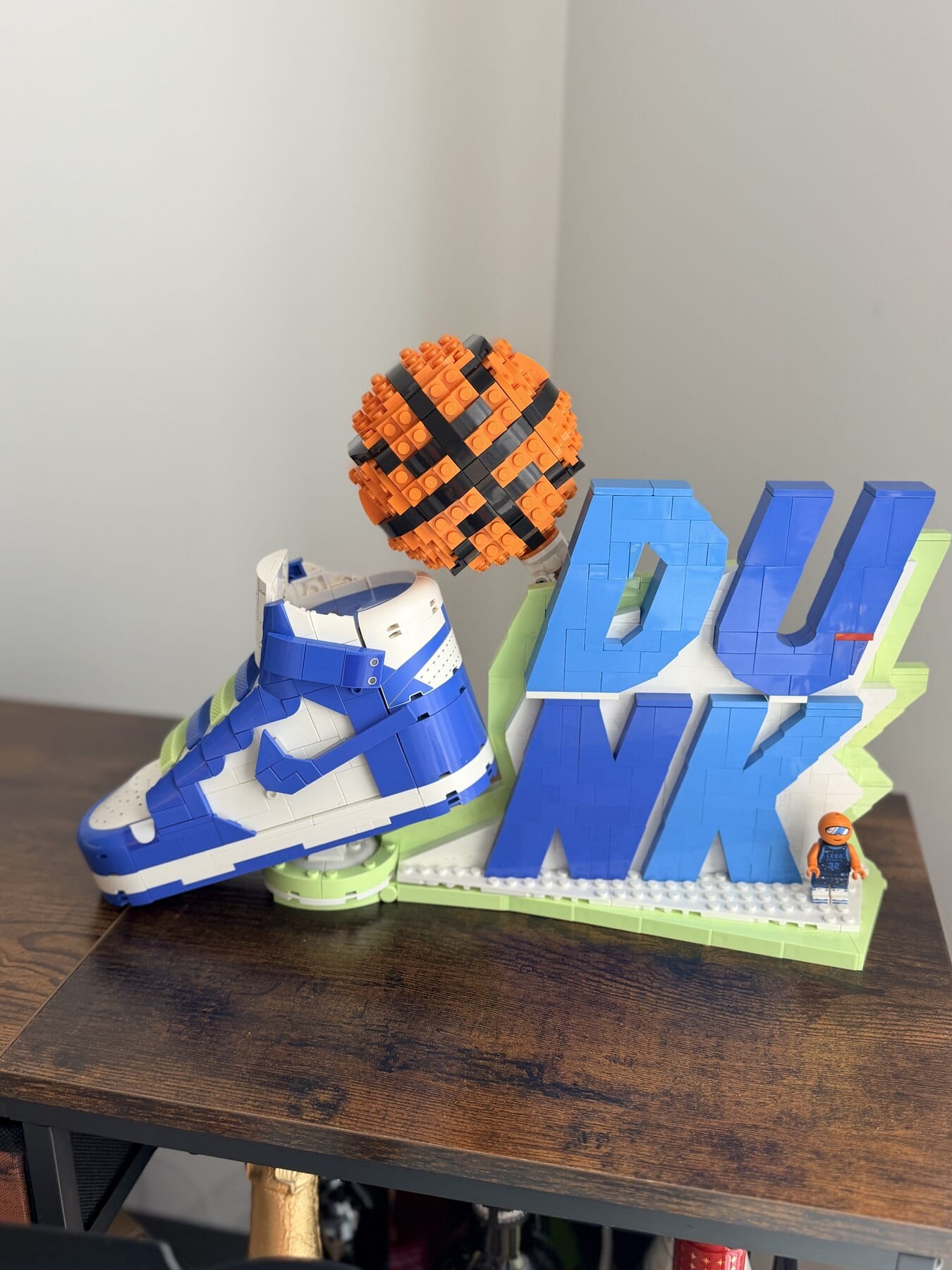
Because what else would your sister-therapist-friend send you from Beaverton, Oregon? Not actual shoes for running, but the replica: 1,180 pieces designed for being still.
What some people may see as regression or distraction is an adult no longer seeking permission to play.
So how did my friend become one of my Architects of Recovery?
Alexis is one of many women from different walks of life redefining recovery on their own terms. And let’s be clear: the recovery isn’t only in building the LEGO sets.
We have a woman over 40 unapologetically asking for what she wants. We have a woman reaching a milestone that, for many, represents a time to “get my life together” and “quit playing around.”
Instead, she made room for more play.
Alexis identified something that helps her decompress, built space for it inside her home, asked for it without apology, and invited her community to participate. Play became a way to express who she is and let her community show up for her.
That is the real coming of age.
Recovery can mean reclaiming the forgotten parts of yourself while continuing to discover new ones—the creative parts, the curious parts and the playful parts.
At 45, Alexis didn’t ask permission to play. She designed an environment in which play could help her recover and invited her community to help her build it.
Forty-five for forty-five is a woman building her own recovery infrastructure, one LEGO brick at a time.
|
Architects of Recovery · BRB—Playing The Blueprint Box |
||||||
|
Make room for play.
|
||||||